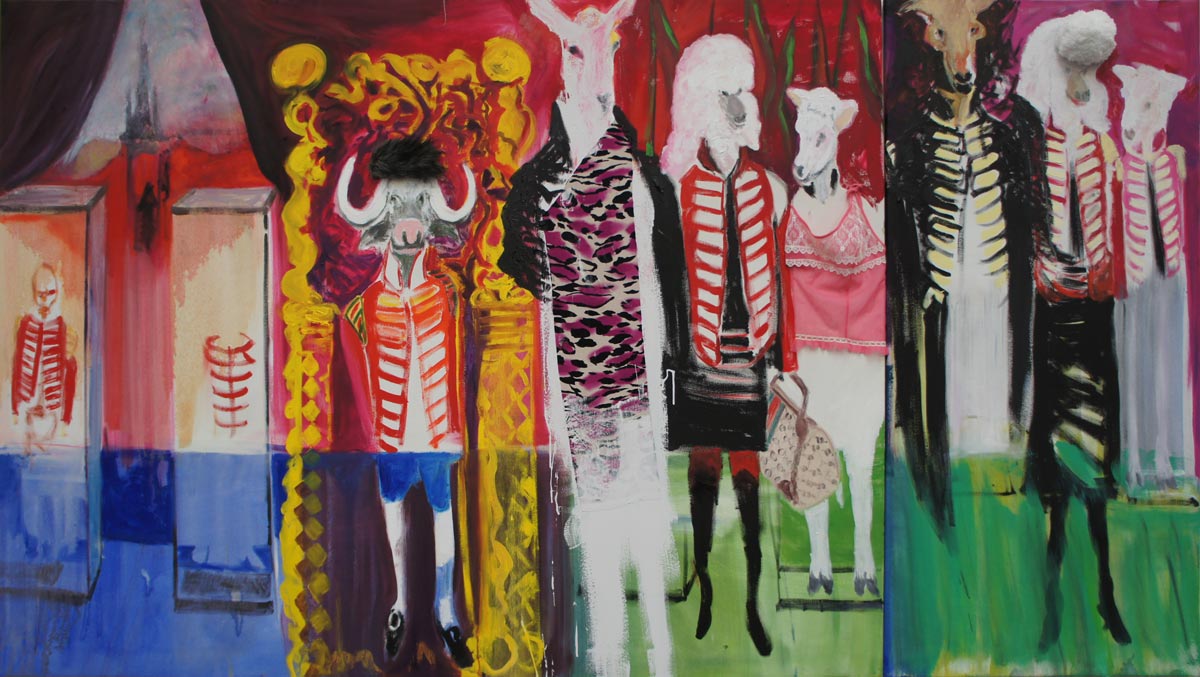
Walker
During the time of the Covid Lockdown, I made these walkers as a tribute to the old people who suffered the most of this period.

During the time of the Covid Lockdown, I made these walkers as a tribute to the old people who suffered the most of this period.


In 2015 I started a series of works in which I fantasized that people we know from paintings or history meet each other in (a sometimes intimate) relationship regardless of time and place.
It started with Milkmaid who ‘visited Japan and met Michiel de Ruyter’ or a black African King met Venus of the painting Botticelli. This lead to a second serie, Interventions.
In the series Interventions I look back at some old master paintings or old photographs from a 21th century point of view.
I painted mostly women (in art).


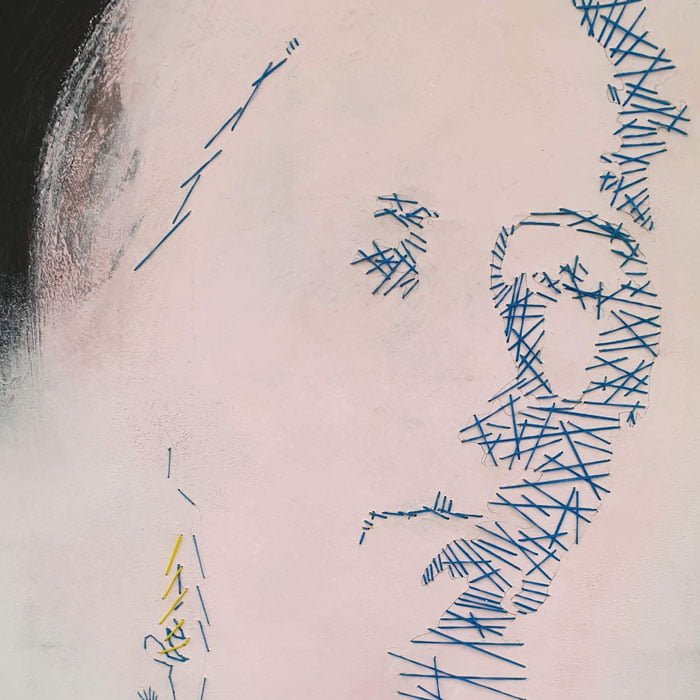


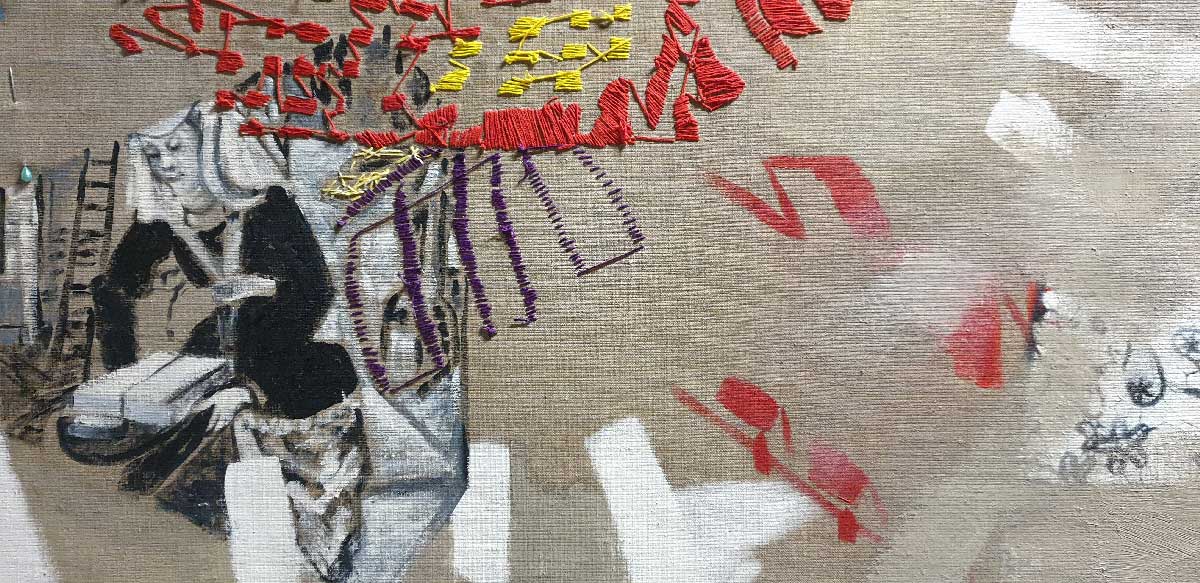


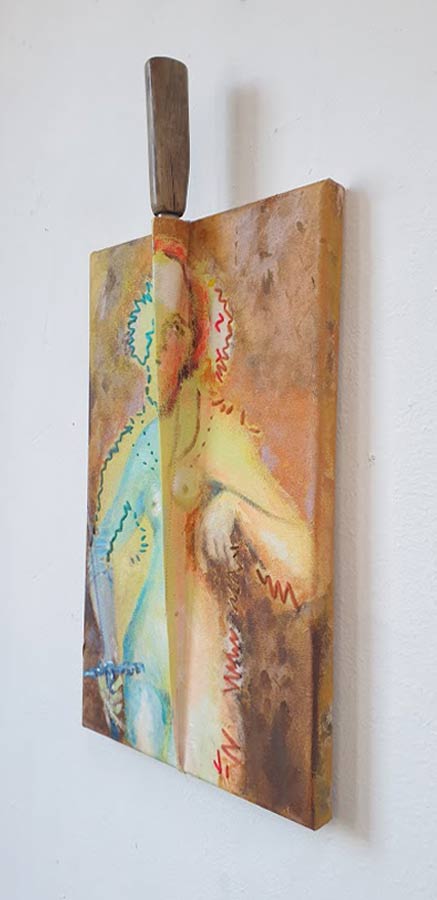


In this series famous and unknown people meet each other in (a sometimes intimate) relationship regardless of time and place.


In 2012 I lived 2,5 months in Botopasi, Surinam in the A.I.R program of ArtCeb. ArtCeb is setup by Isidoor Wens who was born in this village. We lived on the ground of his family.
Special project website


Details ‘Het Slavenschip’


Painting of an ananas with a frame of Suger cane fixed with a rope


weaving with paint, inspired by pangi fabrics, 2022
These little paintings (15 x 10 cm and 25 x 18 cm) are made with the high resolution images on Google Earth. The painting ’the Garden of Delight’ is one of the 12 Masterpieces exposed on Google Earth (3d buildings on…!) by the Prado in Madrid. I combined with tropical fishes and insects.


Marja van Putten
De Slang, Spuistraat 199, Amsterdam
21 feb 2014 t/m 2 mrt 2014
Opening 21 feb 19.00
door Lena Tenaglia


Over het werk:
De schilderijen die te zien zijn in de galerieruimte van het sinds 1983 gekraakte pand deSlang bevatten een veelheid van beelden en associaties. Zowel inhoudelijk als schilderkunstig word je in de war gebracht. In elk schilderij zit wel iets wat wringt: een oppositie. Het ene schilderij levert één uitgesproken helder beeld op en in een ander blijf je op zoek naar coherentie en cirkelen je gedachten rond op zoek naar het verhaal dat zich erachter schuil houdt. Dat bevroeden van het verhaal laat je stap voor stap het schilderij benaderen…
Kenmerkend zijn de tegenstellingen in elk schilderij en per schilderij afzonderlijk.Tegenstellingen in materiaalgebruik, kunsthistorische citaten, thematiek en formaat. De samenhang in het werk laat zich niet makkelijk ontdekken, maar vraagt van de toeschouwer een nauwkeurig onderzoek. Wat voor de ene toeschouwer een kakofonie is aan kleur, is voor de ander een feest van kleur. Sommige delen in een schilderij zijn laag over laag geschilderd, andere stukken zijn gepunkt.
………Marja van Putten woonde in de jaren 80 in het NRC handelsblad gebouw (in het zelfde blok) laat op dezelfde plek meer dan 30 jaar na dato haar werk zien. Het werk straalt nog steeds iets uit van de kritische houding in de maatschappij en de kunstbeweging uit die tijd. Het is kunst die de andere kant wil laten zien van de kunstenaar als ondernemer, als handelaar van koopwaar voor een groot publiek.
Met een bijna fanatieke vasthoudendheid blijft zij het schilderen ontdekken in de volle breedte van de discipline. Dat wil niet zeggen dat het resultaat niet verkoopbaar is, maar verkoop is geen doel op zichzelf. Daarmee krijgt de titel OPPOSITIES nog een extra betekenis……….
OPPOSITIES laat werk zien uit de periode 2010-2014. Zonder expliciet te worden roept de expositie vragen op over hoe wij naar onszelf kijken.


“Until about 100 years ago, almost all women wore headscarves or caps on paintings. I have been working on this theme since 1992. In the first works (1992-1995) to question the ‘image of women in art’.
After 2004, after the attack on Theo van Gogh, the headscarf discussion became a much-discussed topic.
I started to play with the different forms of the headscarf in combination with well-known images such as the women in the paintings of Vermeer, van Gogh, Rembrandt, Pieter de Hoogh and also Little Red Riding Hood, Barbie, Droste vrouw, wife of Boterbabbelaar, Zeeuws meisje etc….


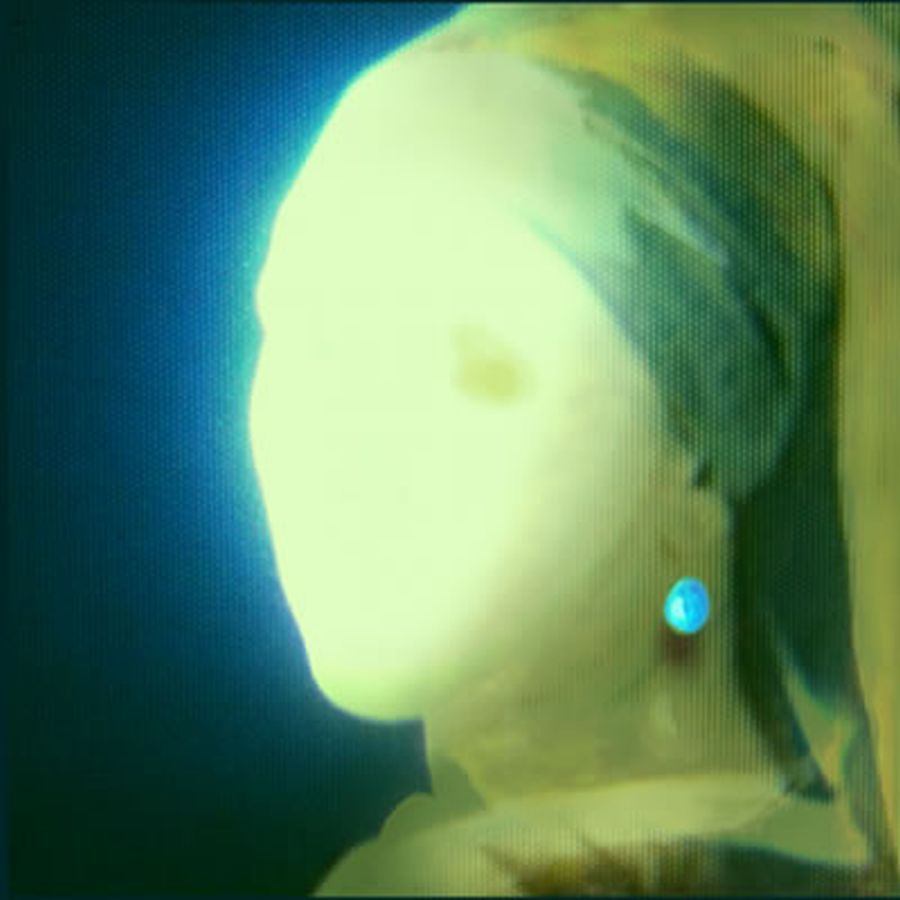


XXL: Big size paintings, several periods


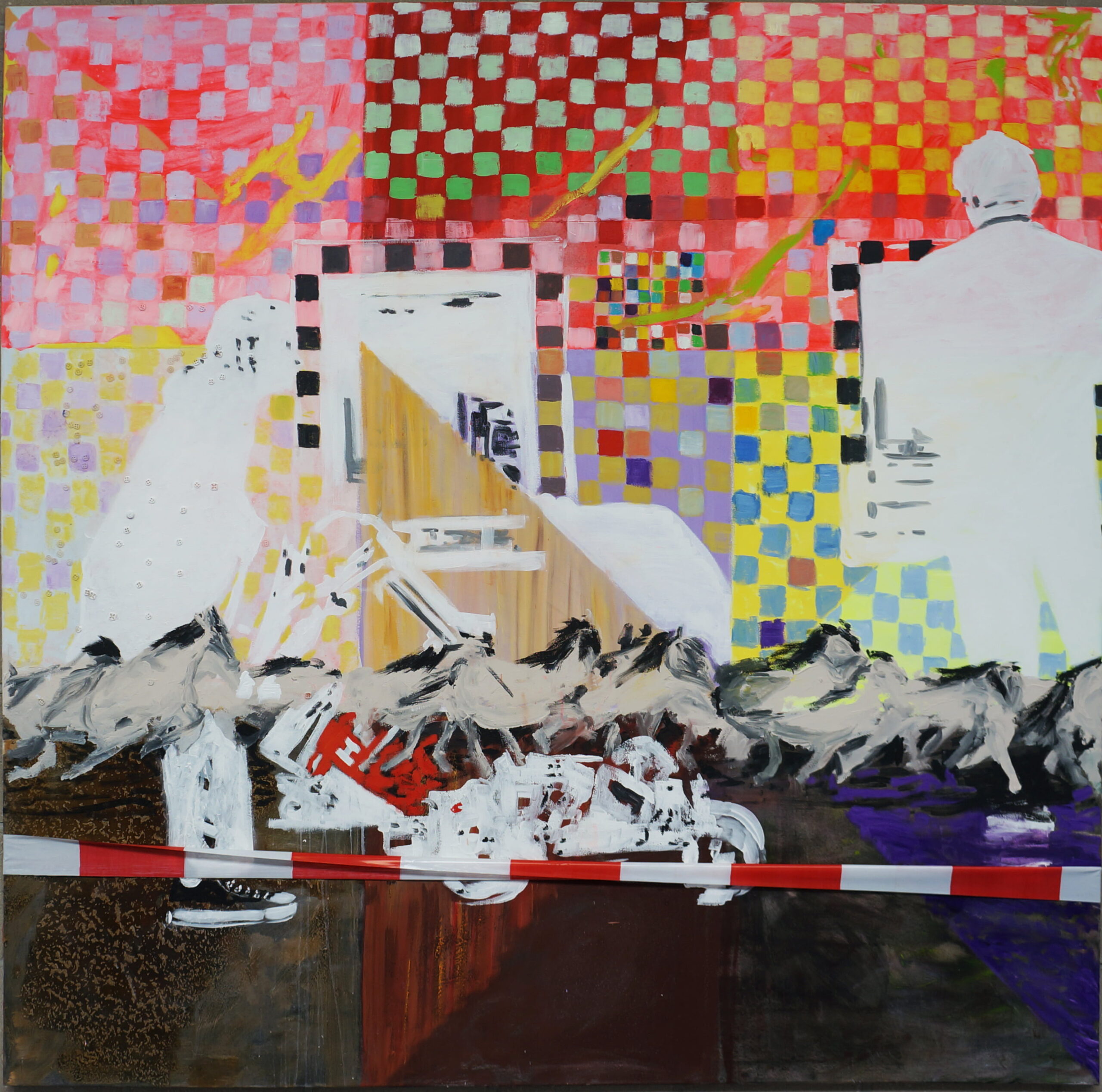


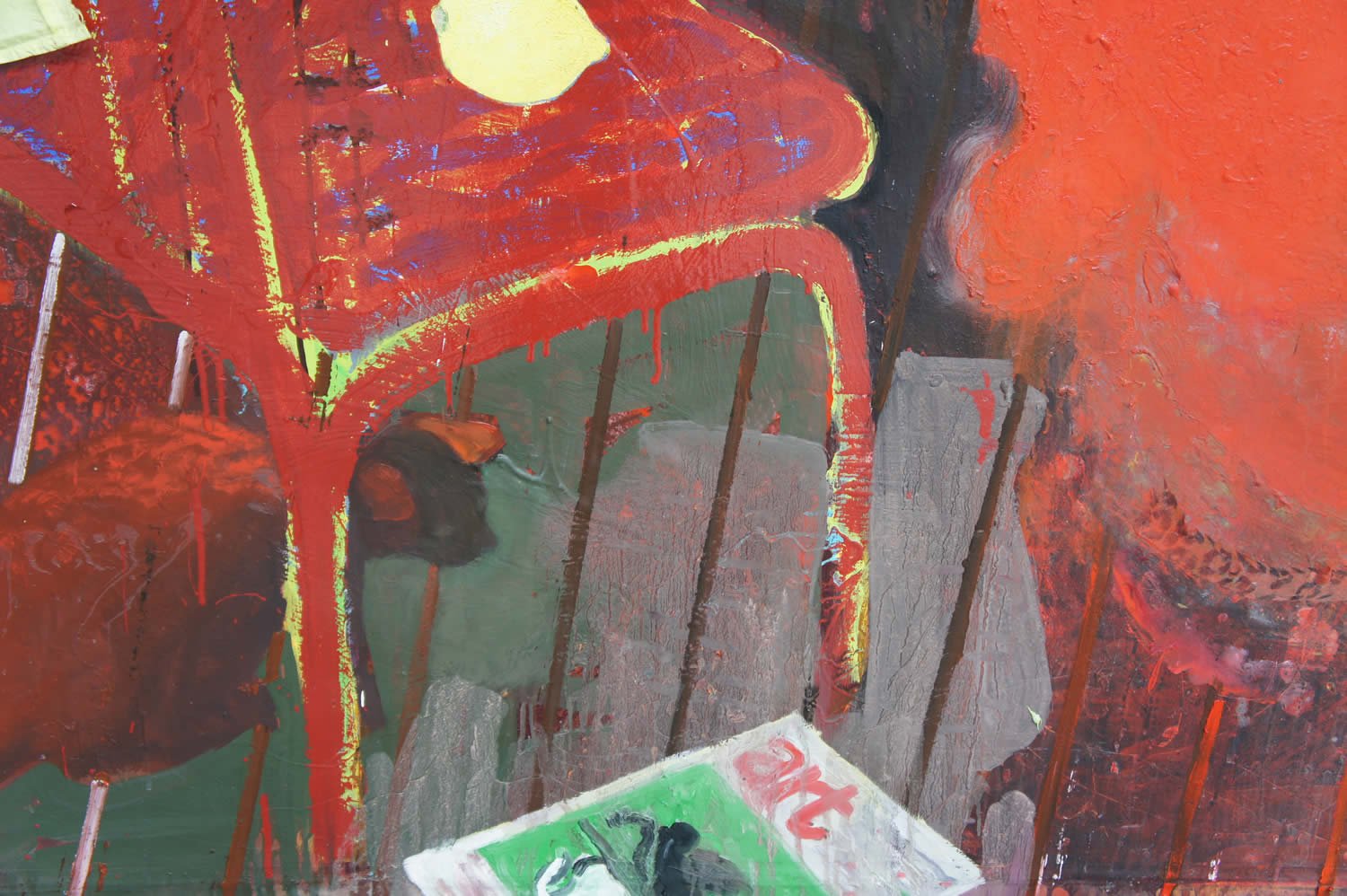
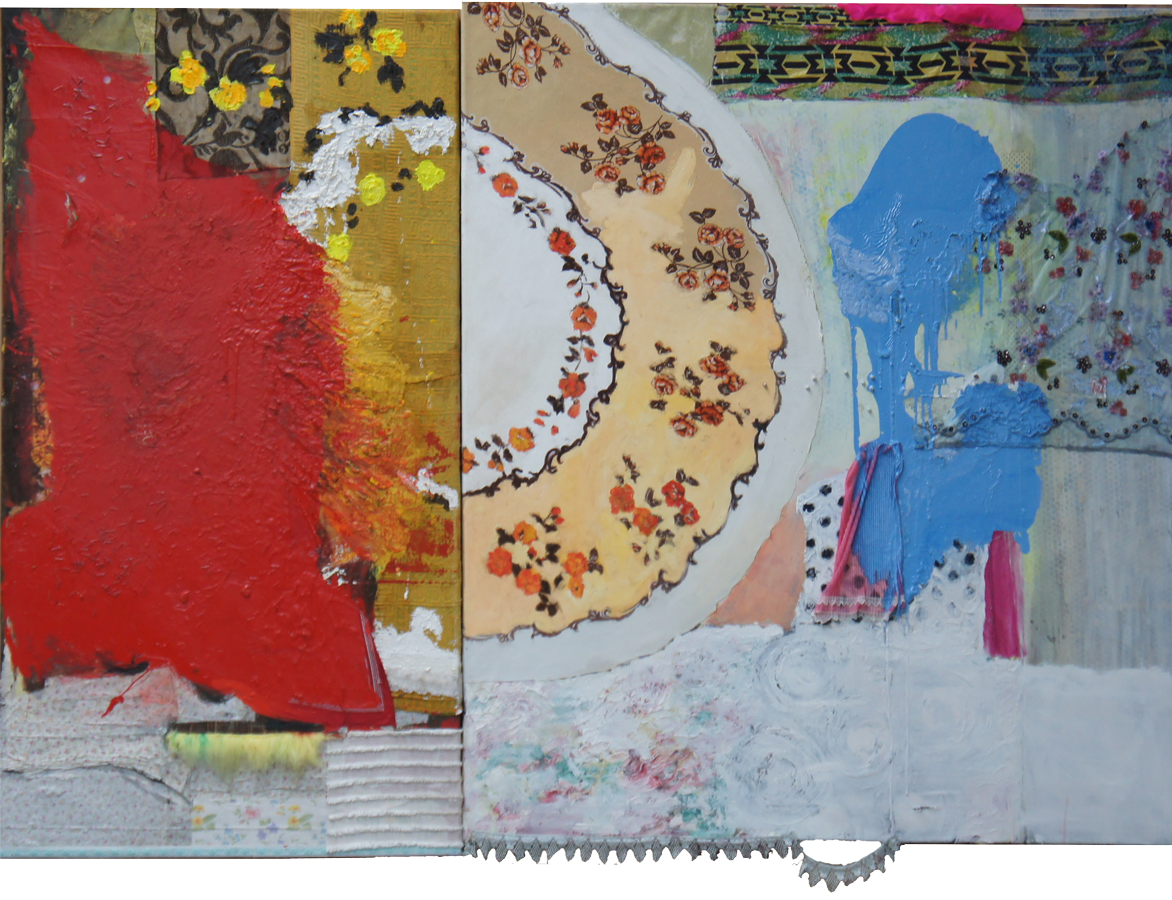


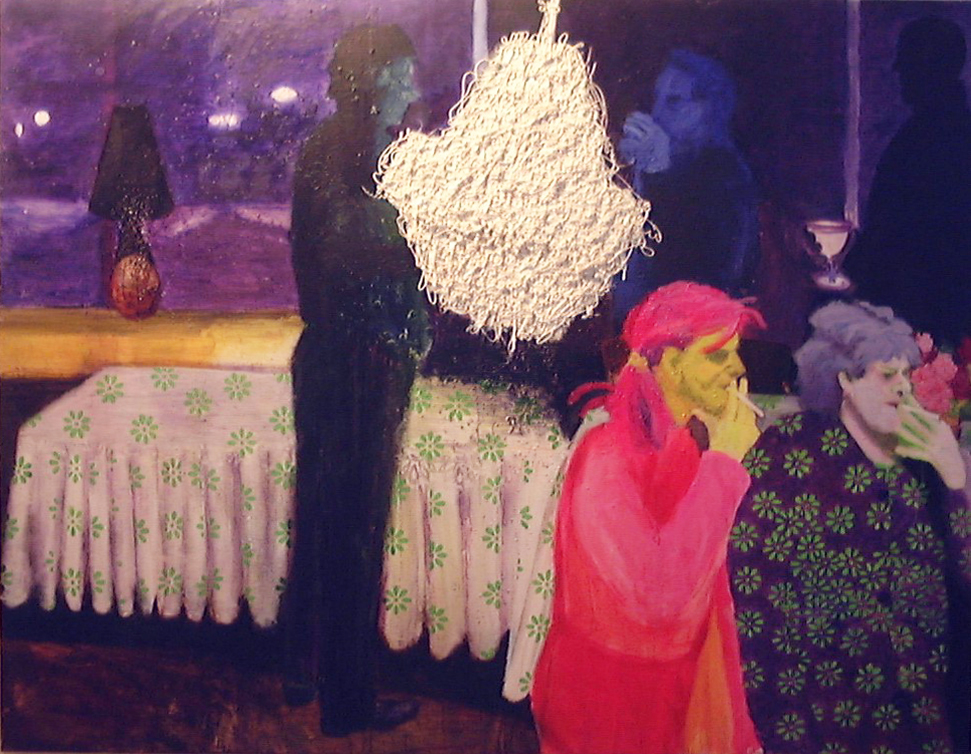
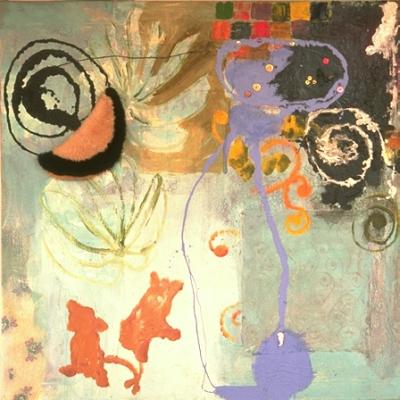
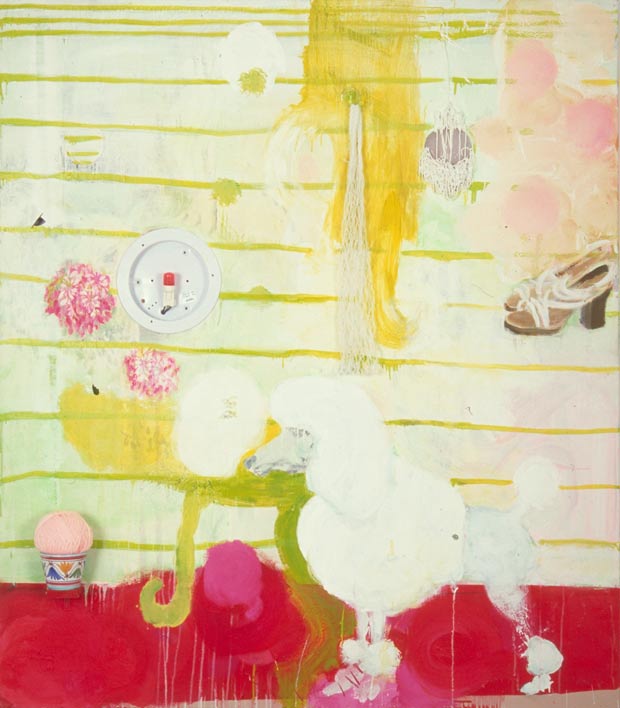
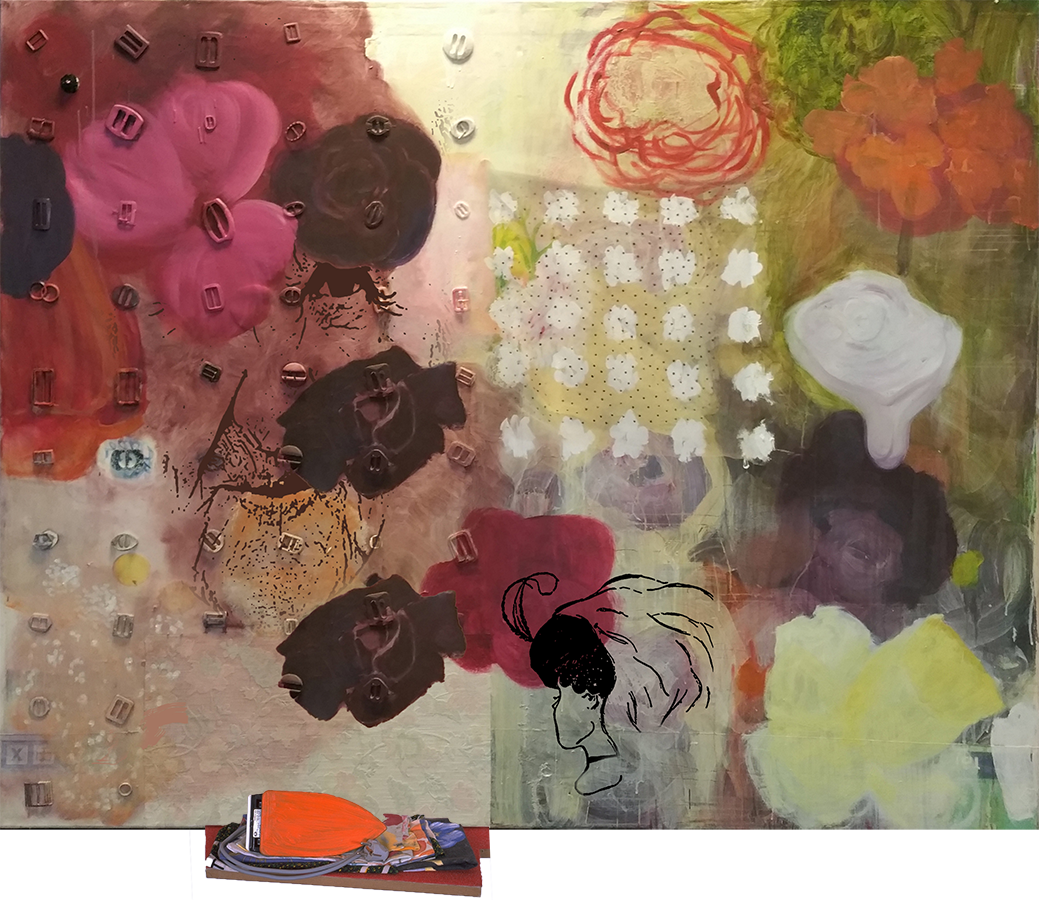
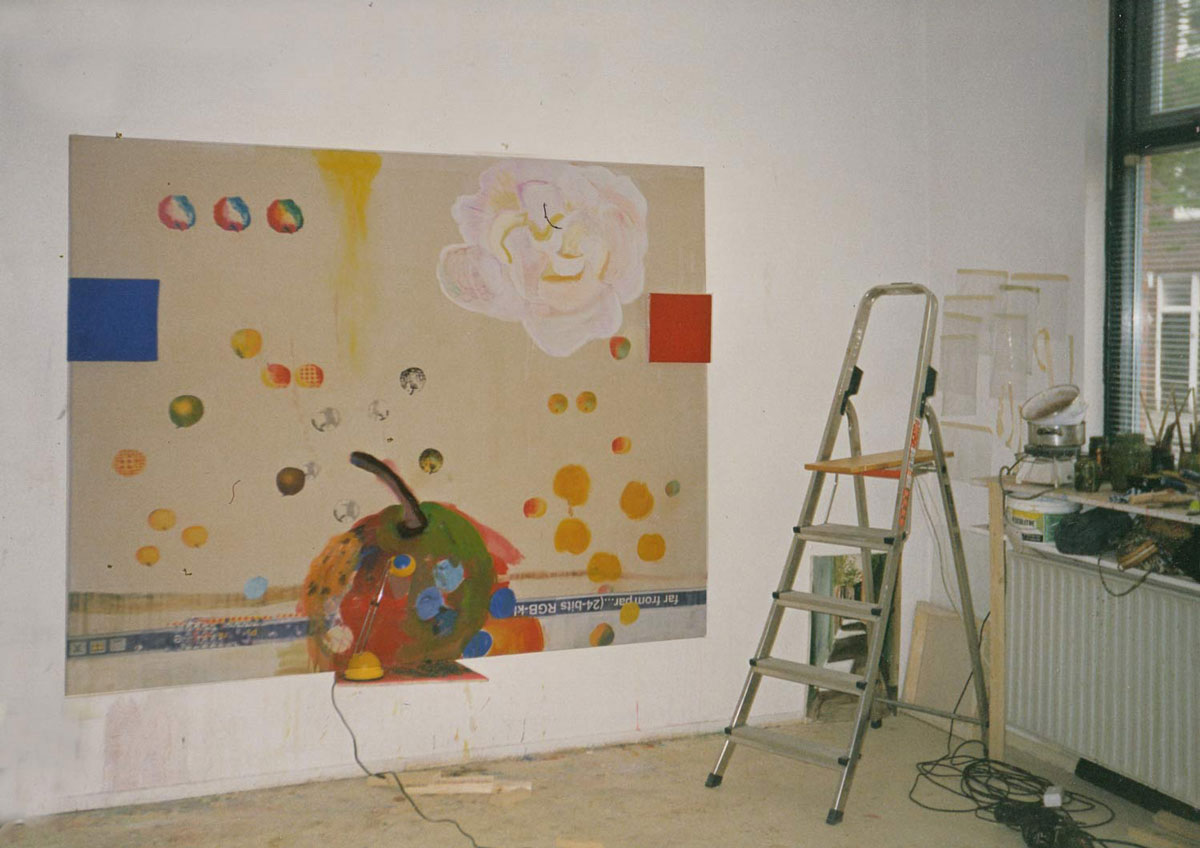
S: Small size paintings, several periods, different experiments


I painted little paintings using the high resolution images on Google Earth. The painting ’the Garden of Delight’ is one of the 12 Masterpieces exposed on Google Earth (3d buildings on…!) by the Prado in Madrid. The parts of this famous and miraculous painting…. (have a look closeby!!!) I combined with tropical fishes and insects.
I made an installation during the 10th aniversary exhibition of Artots, Den Bosch, curated by Isidoor Wens.
Garden of delight (2010)
Expositie 10 jaar Artots, 2010, Den Bosch. Op de muur geschilderde cirkels met kleine schilderijen. C-print ‘Google Earth”, in private collection.


From 1999 – 2008 I made many digital works and experimented with how to print or show them. Mostly I used canvas to print and painted again after printing. My aim was to combine paint and print and to use the ditital way of looking at things, the Digital View into the paint. In 2001 I took the initiative for the artist group Digt_paint. Together with Astrid Moors we made 6 exhibitions, more info: digt-paint.nl | text about the influence of digital media on art below (2008…)
exhibitions
2008 – digt_paint 6.21, ‘the digital view’, Arti et Amicitiae Amsterdam
2007 – digt_paint 5.3 _beta, Haagweg 4 Leiden
2005 – digt_paint 4.5, Osmosis, de toren van Babel, Utrecht
2005 – digt_paint 3.3, ddd, Galerie Jorissen, Mechelen (B)
2003 – digt_paint 2.5, De Nieuwe Vide, Haarlem
2002 – digt_paint 1.5, De Veemvloer, Amsterdam


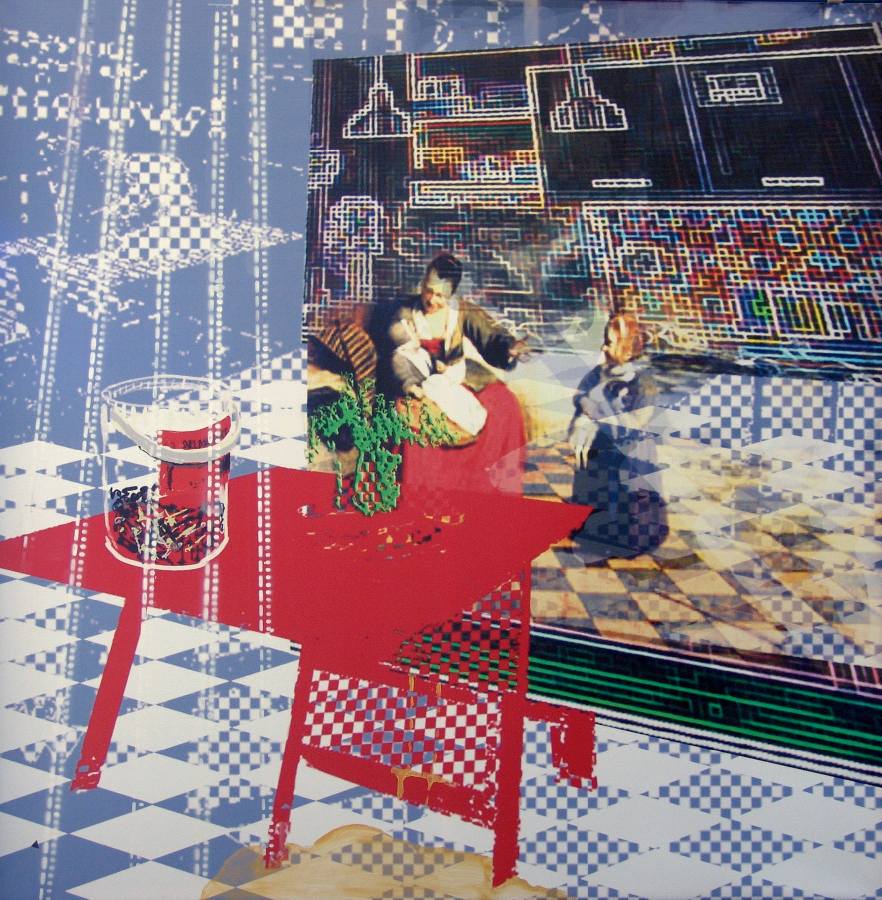


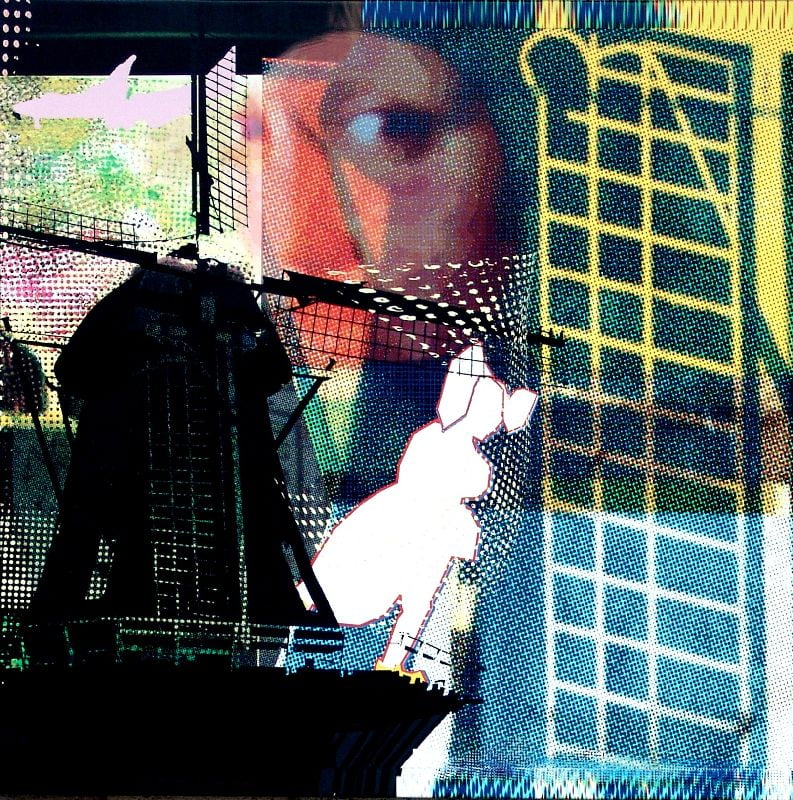


Lecture at Zakynthos Art Festival, 2013

Google landscape painting
When you google a painting for example I googled one by a Dutch painter who lived in seventeenth century Meindert Hobbema, you will find the painting many times and in different color shades. The colors in the images of the painting is changing because of the quality of the photo. But is the real painting not also changing depending from the place where it is hanging. If the light is changing the colors of the landscape theoretically the light ON the painting is changing also, in other words the same painting looks differently when it is hanging in different museums and in different parts of the world.
When do we see the right colors?
Google is showing us more than one image of the same painting at the same time. Only if you ‘ve seen the real painting you can judge what is right, but only to a certain extend. It is the memory of seeing the real painting that tells you which one you recognize as the real one. How disappointing that may be.
Looking at art is a subjective experience depending from the circumstances you are seeing it and where and when you live on earth. Light is one of the influences art.
I also googled Dutch landscape painting then replaced Dutch by 20 other countries to see what comes out of it. Of course is it arbitrary. It is full of mistakes but it still shows an image: for example Greece landscape: blue, Dutch landscape:the sky.


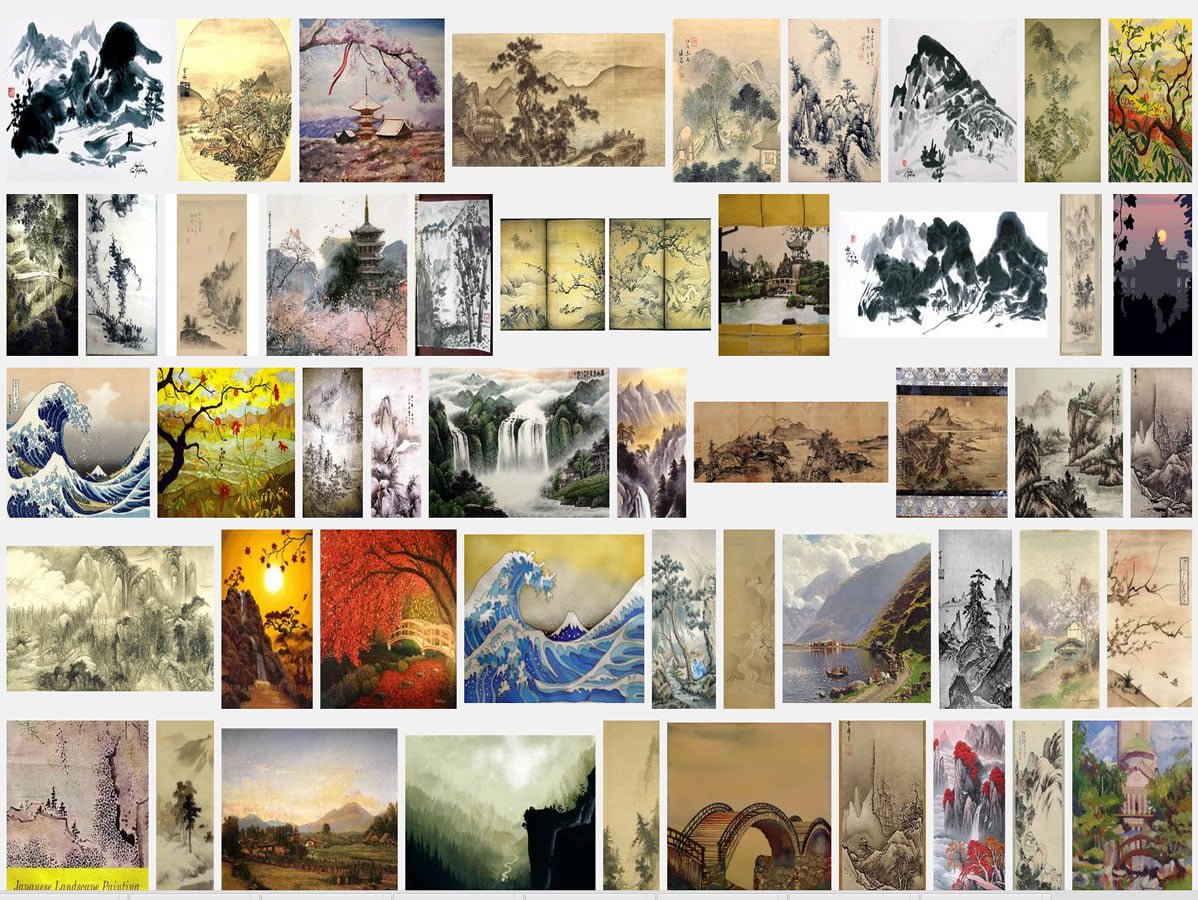


More than a century ago the invention of photography caused a revolution in painting. The reproduction of reality, until that time the main subject of painting, had to compete with photography and now also film. The exclusive right to depict portrait or landscape became the source of much discussion. With the arrival of Impressionism the snapshot like image appeared showing the subject in painting to be clearly influenced by photography .
In the past twenty-five years a new history-making process has taken place, <em>the digital revolution</em>. We see signs of this both on the level of material techniques used and on the level of depicted content . We see this through a daily bombardment of images in TV-leaders and commercials, in holiday pictures, videos and many other social applications outside the arts. We live at a moment in culture where being visually aware, or unaware, defines our thinking and looking. Whilst this is neither a new nor unfamiliar conclusion for the contemporary painter, reproducing reality has become a less valuable and more elusive concept.
Within photography and film the link with the digital revolution is both immediate and direct. However, by digitalizing the documentary photograph the authenticity of the captured and frozen moment is less certain. Similarly, the frequent use of blue screen technology in the world of film and video also displaces reality. The viewer of photography and film accepts the influence of digital media within these disciplines, being neither disappointed nor surprised, and therefore seemingly appreciative of new possibilities.
In painting the link with the digital revolution is less obvious. Nevertheless ‘the digital view’ is more and more apparent through the evolution of image processing/drawing software and creates a new visual palette. This gives completely new possibilities to the contemporary painter / image composer. By mixing photography, printing and digital projections with acrylic and or oil paint the painter is no longer restricted to using one particular technique.
As once expressionism moved towards a more abstract level, to distinguish itself from photography and film, this new approach to the art of painting will walk a less familiar track by using digital techniques. The painters of digt-paint make it their task to show these new tracks by organizing exhibitions. By bringing together different works of art and different artists new discoveries will be exchanged to examine the question; ’What is the influence of digitalizing on painting? ’
January 2008 / digt-paint


digt_paint 2.5
De Nieuwe Vide in Haarlem, maart-april 2003
Deelnemende kunstenaars
Marika Lust
Astrid Moors
Marja van Putten
Warmerdam / Goedewaagen

totaalbeeld expositie
Op de expositie wisselde het licht geprogrammeerd van 75% donker tot 75% licht in een tijdspanne van 6 minuten, om zo recht te doen aan de werken aan de muur en de geprojecteerde werken.
digt-paint.nl
Onderstaand flash filmpje is vertoond in de Nieuwe Vide in Haarlem tijdens de expositie digt_paint 2.5 in 2003. Oorspronkelijk was het een flashfilmpje, het omzetten naar een videoformaat heeft de kwaliteit een beetje slechter gemaakt.
Artikel Haarlems Dagblad